
The Dead Sea: A Living Legacy at the Edge of Survival
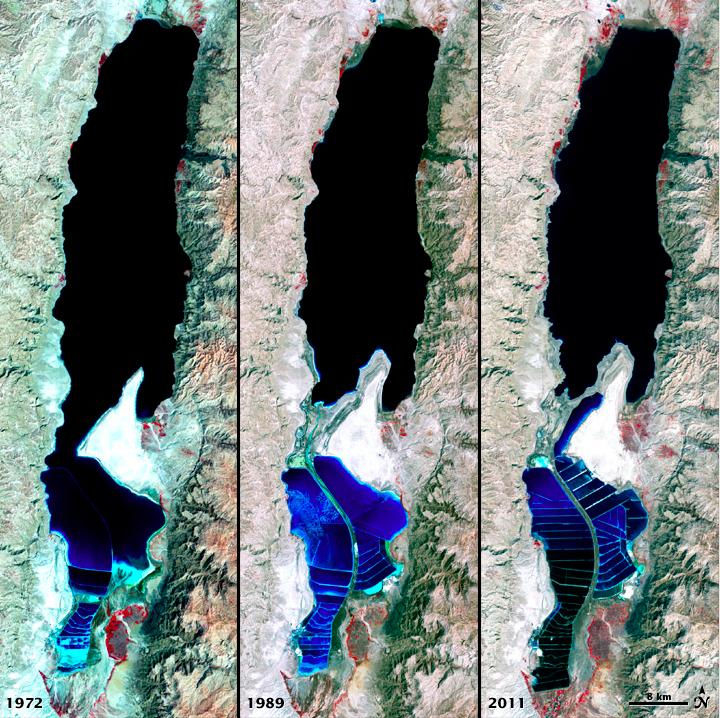
There are few places on earth that feel as ancient, elemental, and spiritually charged as the Dead Sea. Resting at the lowest point on the planet, more than 430 metres below sea level, it is a place where time appears suspended — where mineral-rich waters meet stark desert landscapes, and where history, culture, and nature converge in profound ways.
For swimmers, explorers, and seekers alike, the Dead Sea is not simply a destination. It is an experience — one that challenges our relationship with water, body, and environment. But today, this extraordinary body of water is under threat, and its future hangs in the balance.
A Sea Unlike Any Other
The Dead Sea’s uniqueness is undeniable:
Extreme salinity — nearly ten times saltier than the ocean, allowing effortless floating
Therapeutic properties — rich in minerals long associated with skin health and wellbeing
Cultural and historical depth — referenced across ancient texts and civilizations
Unlike the oceans we swim in, the Dead Sea does not invite movement in the traditional sense. It invites stillness. Buoyancy replaces effort. Silence replaces rhythm. It is, in many ways, the opposite of swimming — and yet, deeply connected to what draws us to water in the first place.
A Sea in Retreat
Over the past 50 years, the Dead Sea has been shrinking at an alarming rate — losing more than a metre of water level each year.
This is not a natural cycle. It is the result of human intervention:
Diversion of the Jordan River, the Dead Sea’s primary water source
Industrial mineral extraction, accelerating water loss
Climate pressures, intensifying evaporation in an already fragile ecosystem
The consequences are visible and deeply concerning:
Thousands of sinkholes forming along the shoreline
Rapidly receding waterlines, leaving once-thriving areas barren
Loss of biodiversity and ecological balance
What was once a vast, continuous body of water is now fragmenting — a powerful symbol of both environmental fragility and human impact.
The Guardians of the Dead Sea
Amidst this decline, a growing movement is emerging — a coalition of scientists, environmentalists, local communities, and global advocates often referred to as the “Guardians of the Dead Sea.”
Their mission is not just preservation, but recovery.
Key initiatives include:
1. Restoring Natural Water Flow
Efforts are underway to rehabilitate sections of the Jordan River, aiming to reintroduce sustainable water inflow to the Dead Sea. While complex — involving cross-border cooperation between Israel, Jordan, and the Palestinian territories — this remains one of the most critical long-term solutions.
2. Advocating Responsible Industry
There is increasing pressure on mineral extraction industries to adopt more sustainable practices, balancing economic benefit with environmental responsibility.
3. Scientific Innovation
Research is exploring engineered solutions — including proposals to channel water from the Red Sea via large-scale infrastructure projects. While controversial, such ideas reflect the urgency of the situation.
4. Raising Global Awareness
Perhaps most importantly, these guardians are working to shift the narrative — positioning the Dead Sea not as a lost cause, but as a global responsibility.
Why It Matters to the Swim4Seas Community
At first glance, the Dead Sea may seem disconnected from the spirit of open-water swimming. It resists strokes, rejects rhythm, and challenges movement.
But at a deeper level, it embodies something essential:
A reminder that water is not infinite
A call to recognise the interconnectedness of ecosystems
An invitation to engage not just as swimmers, but as stewards of our seas
The story of the Dead Sea is not isolated. Around the world, oceans, rivers, and coastlines face similar pressures — from overuse, mismanagement, and climate change.
For a community built around connection to water, this is a moment of reflection — and responsibility.
From Awareness to Action
The future of the Dead Sea will not be determined by a single intervention, but by collective will.
Whether through:
Supporting environmental initiatives
Raising awareness within our communities
Advocating for sustainable water practices
Or simply choosing to engage more consciously with the natural world
Each action contributes to a broader movement.
A Final Reflection
The Dead Sea has endured for millennia — a place of healing, mystery, and profound stillness. Its current decline is not inevitable, but it is urgent.
To stand at its edge today is to witness both loss and possibility.
For Swim4Seas, and for all who are drawn to water, the message is clear:
We do not just swim in the world’s waters.
We are responsible for them.


Comments